Integrating Electricity Sub-Grid with Pumped Hydropower Storage System for Grid Stability and Sustainability
DOI:
https://doi.org/10.63318/waujpasv3i2_40Keywords:
Pumped hydropower storage, Load management, Energy sustainability, Gid stability, Sizing optimizationAbstract
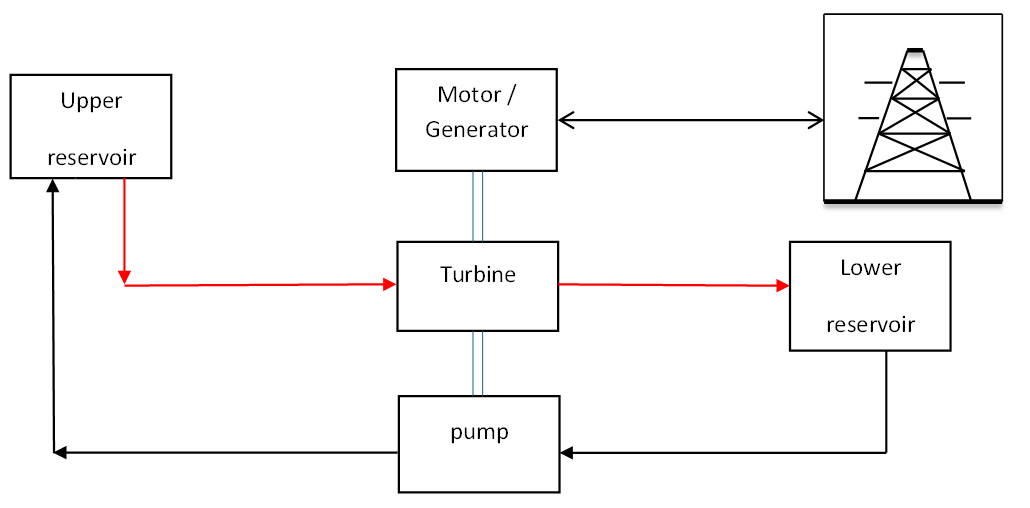
This study provides a comprehensive assessment of the technical, economic, and operational feasibility of implementing a Pumped Hydropower Storage (PHS) system to enhance the stability of the Alshatti electricity subgrid, which has been experiencing prolonged power outages. The proposed PHS system is designed to store excess “off-peak” energy during periods of low demand and release it back into the grid during peak hours to mitigate demand surges, stabilize subgrid performance, and reduce outage frequency. Using hourly generation and load data from 2024, the Levelized Cost of Electricity (LCOE) for the PHS system is calculated at $303.5/MWh, excluding Life Cycle Assessment (LCA) impacts and the carbon cost CCO2.This value is cost-competitive with Brack Alshatti’s current peak-hour electricity cost of $231/MWh generated from gas-fired power plants. When the social cost of carbon is included based on 0.0378 ton CO₂/MWh at $50/ton along with LCA impacts, the LCOE increases to $264.3/MWh, capturing both environmental and societal externalities associated with power plant operation. The Net Present Cost (NPC) of the PHS system, assuming a reservoir storage capacity of 589,959 MWh, is estimated at $3,875,000 over a 60-year project life using an 8% discount rate and 2% inflation rate. Operationally, the system provides an annual energy throughput of 16,477 MWh, effectively managing 3,998 MWh of surplus energy during off-peak hours and offsetting 2,608 MWh of shortages during peak hours. On average, the PHS system exports 0.0378 MWh/hour to the grid during high-demand periods, resulting in an estimated 15% reduction in annual fuel consumption at local power stations. With an expected round-trip efficiency of 80%, the PHS system demonstrates strong capability to accommodate the variability of energy demand and supply across Brack.
Downloads
Downloads
Published
Issue
Section
License

This work is licensed under a Creative Commons Attribution-NonCommercial 4.0 International License.
This journal uses Creative Commons Attribution-Noncommerical 4.0 International License (CC BY-NC 4.0), which permits use, sharing, adaptation, distribution and reproduction in any medium or format, as long as you give appropriate credit to the original author(s) and the source, provide a link to the Creative Commons license, and indicate if changes were made. To view a copy of this license, visit https://creativecommons.org/licenses/by-nc/4.0/.
Copyright of articles
Authors retain copyright of their articles published in this journal.