Histological Effects of Ziziphus spina-christi Leaf Extract on Testes and Epididymides in Male Rabbits
DOI:
https://doi.org/10.63318/waujpasv4i1_25Keywords:
Ziziphus spina-christi, Male reproduction, Testis, Epididymis, Histopathology, RabbitsAbstract
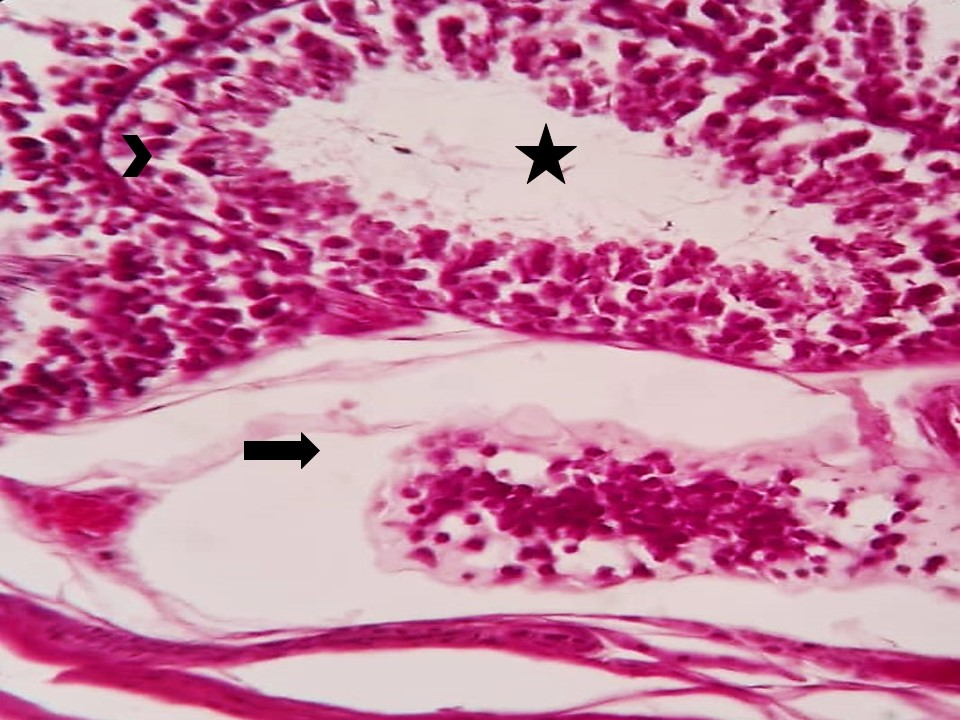
The widespread use of medicinal plants in traditional therapy has raised concerns regarding their long-term safety, particularly with respect to reproductive function. Ziziphus spina-christi (ZSC) is commonly utilized for its antimicrobial, anti-inflammatory, and antioxidant activities; however, limited data are available concerning its possible impact on male reproductive organs. This study was conducted to investigate the histopathological effects of prolonged oral administration of ZSC leaf extract on the testes and epididymides of adult male rabbits. Animals were divided into two groups: a control group receiving distilled water and a treated group administered ZSC leaf extract at a dose of 200 mg/kg body weight daily for six weeks. At the end of the experimental period, testicular and epididymal tissues were harvested and processed for routine microscopic examination. Tissue changes were evaluated descriptively and graded using a semi-quantitative scoring method. Histological analysis revealed marked structural alterations in the reproductive tissues of treated animals compared with controls. Testicular sections demonstrated degeneration of seminiferous tubules, decreased spermatogenic cell layers, thinning of the germinal epithelium, and vascular congestion. In the epididymis, reduced sperm density, epithelial degeneration, luminal debris, and thickening of connective tissue were observed. These findings indicate that prolonged administration of ZSC leaf extract may adversely influence the histological architecture of male reproductive organs. Further studies are warranted to clarify its reproductive safety and underlying mechanisms.
Downloads
Downloads
Published
Issue
Section
License
Copyright (c) 2026 The authors

This work is licensed under a Creative Commons Attribution-NonCommercial 4.0 International License.
This journal uses Creative Commons Attribution-Noncommerical 4.0 International License (CC BY-NC 4.0), which permits use, sharing, adaptation, distribution and reproduction in any medium or format, as long as you give appropriate credit to the original author(s) and the source, provide a link to the Creative Commons license, and indicate if changes were made. To view a copy of this license, visit https://creativecommons.org/licenses/by-nc/4.0/.
Copyright of articles
Authors retain copyright of their articles published in this journal.