The Role of Non-Profit Organizations in Promoting Environmental Awareness in the Al-Jabal Al-Akhdar Region: A Case Study of Al Bayda City
DOI:
https://doi.org/10.63318/waujpasv4i1_55Keywords:
Environmental awareness, Non-Profit organizations, Environmental values, Environmental behavior, Al Jabal Al AkhdarAbstract
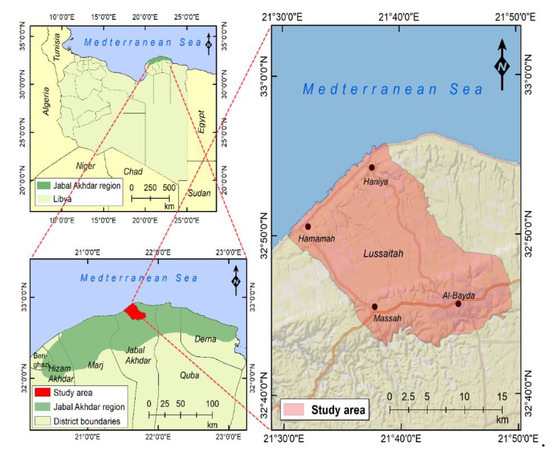
The Al-Jabal Al-Akhdar region is characterized by unique natural components and a sensitive environment that necessitates concerted efforts to preserve it and protect it from increasing environmental problems and challenges. Hence, the role of non-profit organizations emerges as a partner in developing environmental awareness in the community. This study aims to measure the level of environmental awareness among the residents of the Al-Jabal Al- khdar region, assess the extent of non-profit organizations' contribution to spreading and developing this awareness, identify the most prominent challenges they face, and analyze prevailing environmental values and attitudes. The study adopted a descriptive-analytical approach and a quantitative approach through a questionnaire distributed to a random sample of (385) individuals. The results showed that the level of environmental awareness was moderate, tending towards low (1.81), while environmental values and attitudes recorded a high level (3.60). This indicates a gap between perception, awareness, and environmental behavior, meaning a theoretical value-based awareness that is not sufficiently reflected in the practical practices of community members. The study also revealed a severe deficiency in the role and effectiveness of environmental organizations, which was at a moderate level (1.95), with a statistically significant positive correlation between their role and the level of awareness (R=0.241). However, this impact remains limited; this was attributed to weak outreach, lack of funding, institutional support, and community participation. Statistical analyses also confirmed a weak correlation between the demographic characteristics of the respondents and their level of environmental awareness. The study concluded with key recommendations, including: enhancing the practical role of organizations and expanding the scope of their activities, providing financial support, and developing awareness activities by integrating environmental education into educational systems, establishing partnerships with educational institutions in universities, academies, and higher institutes to develop a joint research environment addressing environmental studies, and submitting annual reports to the community and decision-makers, as well as investing social media platforms in digital awareness campaigns, and moving towards practical programs aimed at changing individuals' environmental behavior.
Downloads
Downloads
Published
Issue
Section
License
Copyright (c) 2025 Authors

This work is licensed under a Creative Commons Attribution-NonCommercial 4.0 International License.
This journal uses Creative Commons Attribution-Noncommerical 4.0 International License (CC BY-NC 4.0), which permits use, sharing, adaptation, distribution and reproduction in any medium or format, as long as you give appropriate credit to the original author(s) and the source, provide a link to the Creative Commons license, and indicate if changes were made. To view a copy of this license, visit https://creativecommons.org/licenses/by-nc/4.0/.
Copyright of articles
Authors retain copyright of their articles published in this journal.