Demographic Patterns and Clinical Outcomes of Viral Hepatitis B and C among Hospitalized and Outpatient Cohorts in Southern Libya
DOI:
https://doi.org/10.63318/waujpasv4i2_50Keywords:
Libya, HBV, HCV, Liver cirrhosis, ELISA, CoinfectionAbstract
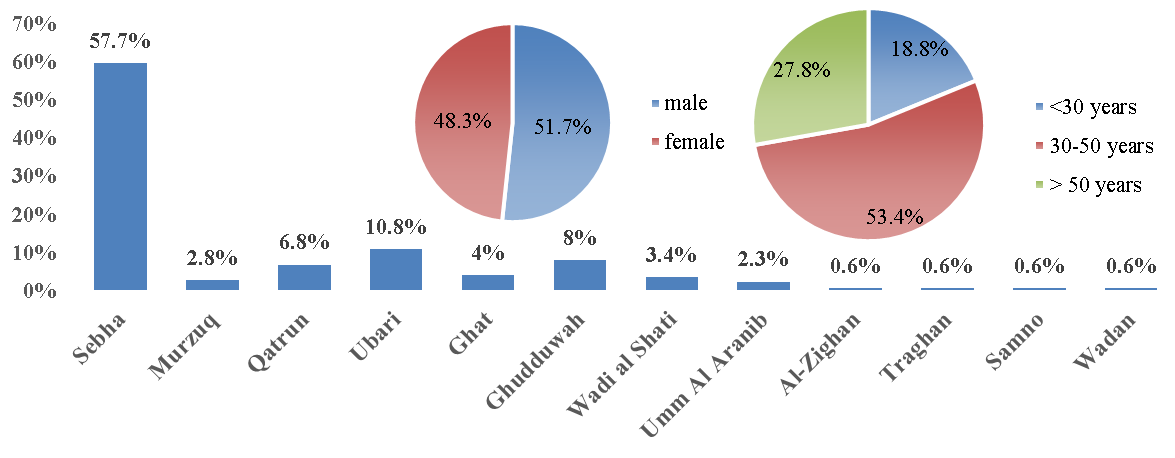
Hepatitis B and C are viral infections that can cause severe liver damage. Although they share certain clinical similarities, they are caused by entirely distinct viruses and require different strategies for prevention and treatment. This study investigated the epidemiological burden and demographic distribution of viral hepatitis infections in southern Libya over recent years. A cohort of 176 randomly selected patients diagnosed with HBV and/or HCV was evaluated across two primary healthcare centers. The study population was predominantly Libyan (78.4%), with the remaining population comprising migrants from Niger, Egypt, Sudan, Chad, and Senegal. Hepatitis B (HBV) constituted the vast majority of infections, representing 80.1% of all cases. Overall, viral hepatitis was more frequent in males (51.7%, n=91) than in females (48.3%, n=85). While HBV infection rates were higher in males (53.9%) than females (46.1%), HCV showed a notably higher frequency among female participants (57.5%) than males (42.5%). Although infections spanned all age groups, they were heavily concentrated between 30 and 50 years of age (53.4%). Geographically, Sabha city recorded the highest overall infection frequency (59.7%). Additionally, HIV coinfection was rare, identified in only two patients within the study group. Liver cirrhosis was observed in 21 patients (11.93%). Ultimately, this study demonstrates that HBV and HCV are deeply entrenched among both residents and migrants in southern Libya
Downloads
Downloads
Published
Issue
Section
License
Copyright (c) 2026 The authors

This work is licensed under a Creative Commons Attribution-NonCommercial 4.0 International License.
This journal uses Creative Commons Attribution-Noncommerical 4.0 International License (CC BY-NC 4.0), which permits use, sharing, adaptation, distribution and reproduction in any medium or format, as long as you give appropriate credit to the original author(s) and the source, provide a link to the Creative Commons license, and indicate if changes were made. To view a copy of this license, visit https://creativecommons.org/licenses/by-nc/4.0/.
Copyright of articles
Authors retain copyright of their articles published in this journal.