Modeling A 600 MW Floating Photovoltaic System in Al-Khums city, Libya: Performance Analysis and Implementation Using PVSyst
DOI:
https://doi.org/10.63318/waujpasv4i1_24Keywords:
Floating photovoltaic (FPV), PVsyst simulation, Renewable energy, Grid integration, LibyaAbstract
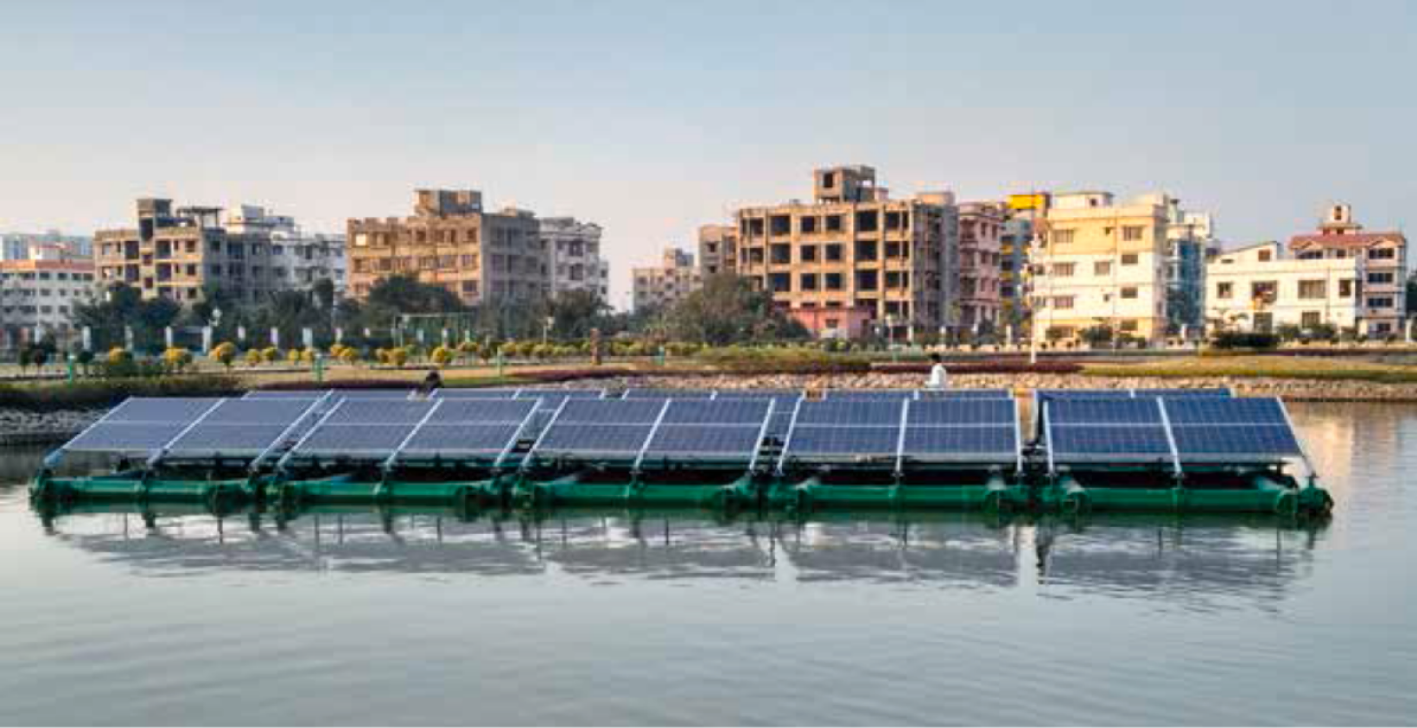
This research presents an analysis of a 600 MW AC floating PV system to be installed in Al-Khoms, Libya. The system was simulated using PVsyst version 7.4 software with the transposition method based on the HDKR method using weather data from Meteonorm version 8.1 and Solargis weather data sources. The simulation results show that the system will have an annual AC energy production of 1,346 GWh/year, a system performance ratio of 81.7%, and a specific energy production ranging from 1,850 to 2,050 kWh/kWp/year with a capacity factor of 25.6%. The FPV system will have a bifacial rear irradiance gain of 3.0 to 4.5% and will conserve 1.25 million cubic meters of surface water per year, equivalent to a monetary value of €250,000 to €625,000 per year. Total investment required for the project falls in the range of €480 to €540 million, amounting to €0.80 to €0.90 per watt-peak (Wp) of direct current, and results in a Levelized Cost of Energy (LCOE) of €0.055 to €0.065 per kilowatt-hour (kWh) over a period of 25 years and a discount rate of 5%. This is in line with the LCOE of conventional power plants in Libya, which stands in the range of €0.07 to €0.10/kWh. Upon inclusion of the social cost of carbon (SC_CO2 ~$70/tCO2), the environmentally adjusted LCOE stands in the range of €0.028 to €0.035/kWh. The results obtained prove the feasibility of utility-scale floating photovoltaic (FPV) systems in Libya.
Downloads
Published
Issue
Section
License
Copyright (c) 2026 The authors

This work is licensed under a Creative Commons Attribution-NonCommercial 4.0 International License.
This journal uses Creative Commons Attribution-Noncommerical 4.0 International License (CC BY-NC 4.0), which permits use, sharing, adaptation, distribution and reproduction in any medium or format, as long as you give appropriate credit to the original author(s) and the source, provide a link to the Creative Commons license, and indicate if changes were made. To view a copy of this license, visit https://creativecommons.org/licenses/by-nc/4.0/.
Copyright of articles
Authors retain copyright of their articles published in this journal.