Comparative Analysis of Phenolic Compounds in Coffee Prepared by American and Arabic Brewing Methods
DOI:
https://doi.org/10.63318/waujpasv4i1_23Keywords:
Coffee, Phenolic compounds, Folin-Ciocalteu, Gallic acid, Preparation methodsAbstract
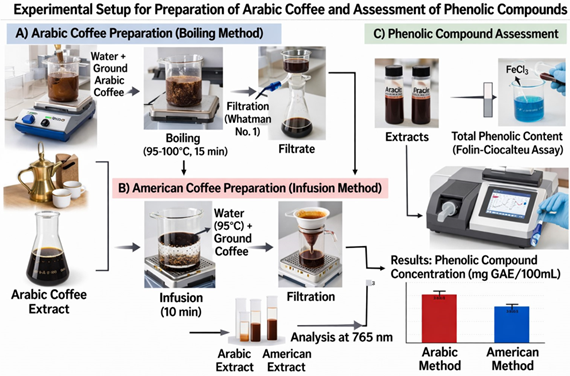
Coffee’s high antioxidant ability is attributed to its abundance of minerals and bioactive substances including caffeic acid, chlorogenic acid, and other phenolic compounds. Phenolic molecules with high nutritional value, are decomposed by the high temperatures that coffee beans are exposed to in order to produce volatile aromatic chemicals, the concentration of this active compounds are affected by the type of preparation method. The aim of this study was comparing the difference between Arabic and American coffee preparing methods in term of phenolic compounds quantity among different twelve coffee brands collected from Libyan market. Folin–Ciocalteu assay was used in quantification of phenolic compounds in all samples. The results of this study show that the preparing method have significant role in determining the phenolic content of coffee. The Arabic preparation method, which involves boiling the water with coffee, resulted in a significant reduction in Total Phenolic Compounds (TPC) compared to the American method for all samples. On average, the TPC of the all coffee samples with two different preparation methods arranged between 225.545 to 508.096 mg GAE /L. Generally, the findings show that the American preparing method is more effective in producing phenolic compounds, although the degree of this effect differs among coffee brands.
Downloads
Downloads
Published
Issue
Section
License
Copyright (c) 2026 The authors

This work is licensed under a Creative Commons Attribution-NonCommercial 4.0 International License.
This journal uses Creative Commons Attribution-Noncommerical 4.0 International License (CC BY-NC 4.0), which permits use, sharing, adaptation, distribution and reproduction in any medium or format, as long as you give appropriate credit to the original author(s) and the source, provide a link to the Creative Commons license, and indicate if changes were made. To view a copy of this license, visit https://creativecommons.org/licenses/by-nc/4.0/.
Copyright of articles
Authors retain copyright of their articles published in this journal.